


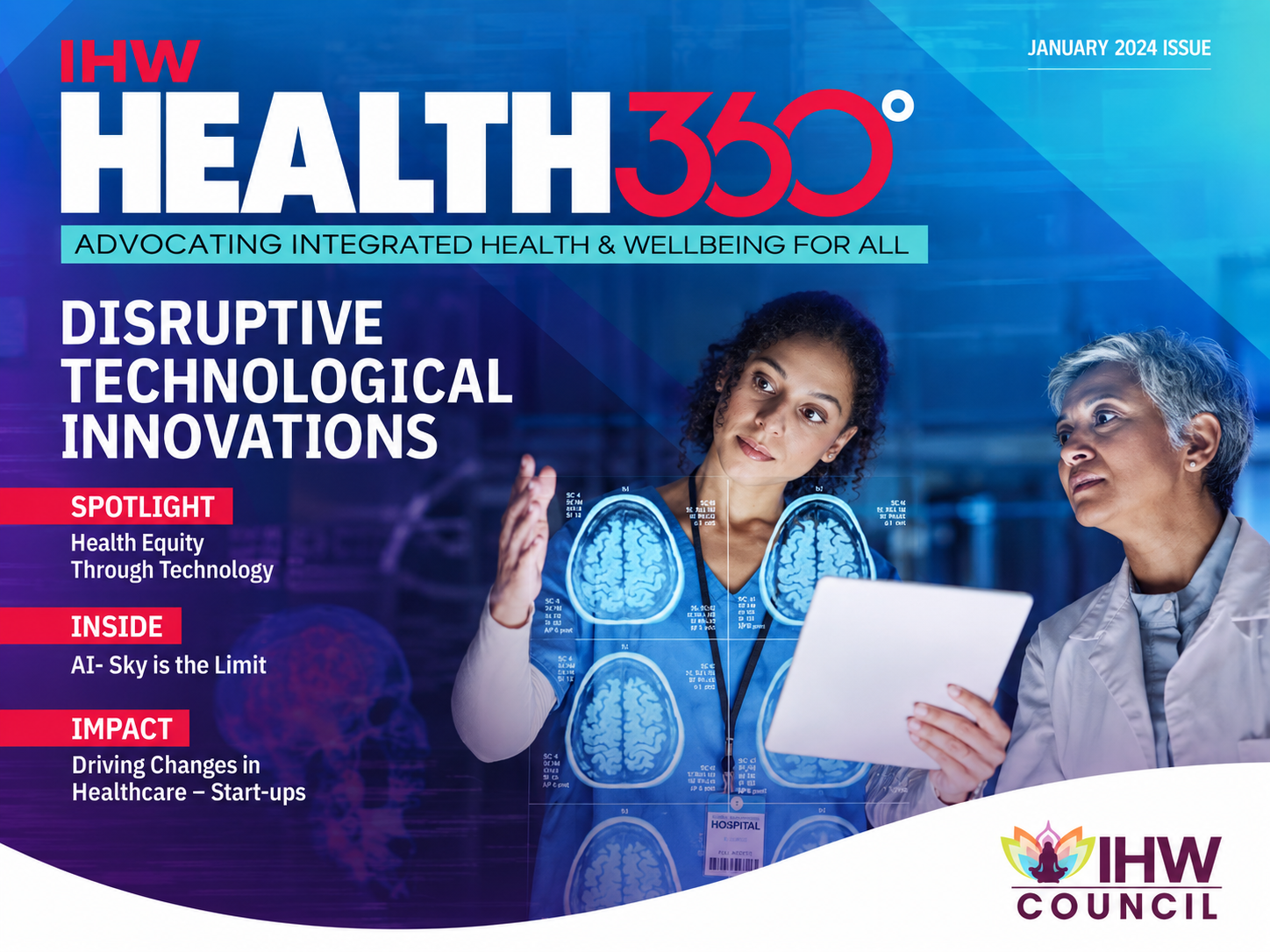


ndia’s healthcare landscape is undergoing a significant transformation, with digital technology becoming an increasingly important part of how healthcare is accessed, delivered and managed. The Digital Health Magazine 2024 by IHW Council highlights how technologies such as telemedicine, artificial intelligence (AI), electronic health records, digital identity, wearables and data-driven platforms are creating new possibilities for patients and healthcare providers.
The transformation accelerated during the COVID-19 pandemic, when healthcare systems had to rapidly adopt technology to maintain access to services. The magazine describes this period as a catalyst for digitisation and a shift towards more patient-centric healthcare. The challenge now is to translate technological progress into healthcare that is accessible, affordable, secure and inclusive.
Digital Technology is Reshaping Healthcare Delivery
Digital health is much more than moving medical records online. It represents a broader transformation in how patients, doctors, hospitals, diagnostic providers and health systems interact.
The magazine highlights the potential of digital tools to improve communication, enable faster decision-making, support personalised care and make health monitoring easier. Importantly, digital healthcare can enable people to access services beyond traditional physical healthcare facilities, creating opportunities for communities that may otherwise struggle to reach specialists or advanced medical services.
Telemedicine is particularly relevant in this context. By connecting patients and healthcare professionals remotely, digital platforms can help bridge geographical barriers and extend expertise beyond major urban centres.
AI is Creating New Possibilities for Patient Care
Artificial intelligence is emerging as another important component of digital healthcare. The magazine explores the use of AI in diagnostics, precision medicine and clinical decision support.
AI-based technologies can help healthcare professionals analyse information and generate insights that support diagnosis and prognosis. At the same time, automation can reduce some of the administrative workload faced by doctors. The publication discusses applications such as AI-enabled voice recognition for clinical documentation and routine administrative activities.
Generative AI and large language models further expand the possibilities for digital healthcare. However, innovation must remain connected to healthcare outcomes and patient needs rather than becoming an objective in itself.
Building a Connected Digital Health Ecosystem
A truly digital healthcare system requires different stakeholders and platforms to communicate effectively.
Digital health records and secure digital identities can help create continuity across a patient’s healthcare journey. The magazine highlights initiatives involving digital health IDs and interconnected health records, including Project DIISHA, which focuses on rural healthcare and frontline health workers while using identity verification and ABHA IDs as part of its digital ecosystem.
The publication also discusses platforms designed to connect healthcare providers, screening technologies, administrators and citizens through health information exchange. Such models demonstrate the potential of digital infrastructure to make healthcare information more accessible across different points of care.
Digital Identity and Data Security Matter
As healthcare becomes more connected, protecting patient information becomes increasingly important.
The magazine identifies digital identity as an important tool for securing medical information, improving efficiency and ensuring appropriate access to healthcare data. It also draws attention to cybersecurity risks and the need to protect sensitive patient information in increasingly digital health systems.
Trust will therefore be fundamental to the future of digital health. Patients need confidence that their health information is being handled responsibly while healthcare organisations require secure systems capable of exchanging information efficiently.
Closing the Last-Mile Digital Health Gap
Technology alone cannot guarantee equitable healthcare.
The magazine identifies three major challenges to deeper digital integration: infrastructure gaps, data security concerns and inclusivity. Limited internet connectivity in remote regions, differences in digital literacy and fragmented health-data systems can prevent technology from reaching the people who could benefit from it most.
Suggested solutions include stronger digital infrastructure, mobile healthcare capabilities, interoperable electronic health records, cybersecurity awareness, user-friendly platforms and digitally empowered community health workers. Public-private collaboration can also contribute to extending modern healthcare services to underserved communities.
From Digital Innovation to Better Health Outcomes
India’s digital health journey is ultimately about people rather than technology.
Wearables can support preventive health monitoring. Telemedicine can connect patients with expertise. AI can strengthen clinical decision-making. Digital records can improve continuity of care. Secure digital identity can help individuals navigate an increasingly connected health ecosystem.
The magazine also positions the Ayushman Bharat Digital Mission as an important foundation for India’s movement towards more holistic, inclusive and accessible healthcare, while emphasising the need to extend the benefits of digital technology to diverse, remote and vulnerable populations. Digital-Health-Magazine-copy-1-…
The next phase of digital health in India will therefore depend not only on developing innovative technologies but also on ensuring that they are trustworthy, affordable, interoperable and accessible. When innovation is combined with inclusion and a strong patient-centric approach, digital health can become an important enabler of better health and wellbeing for all.
