


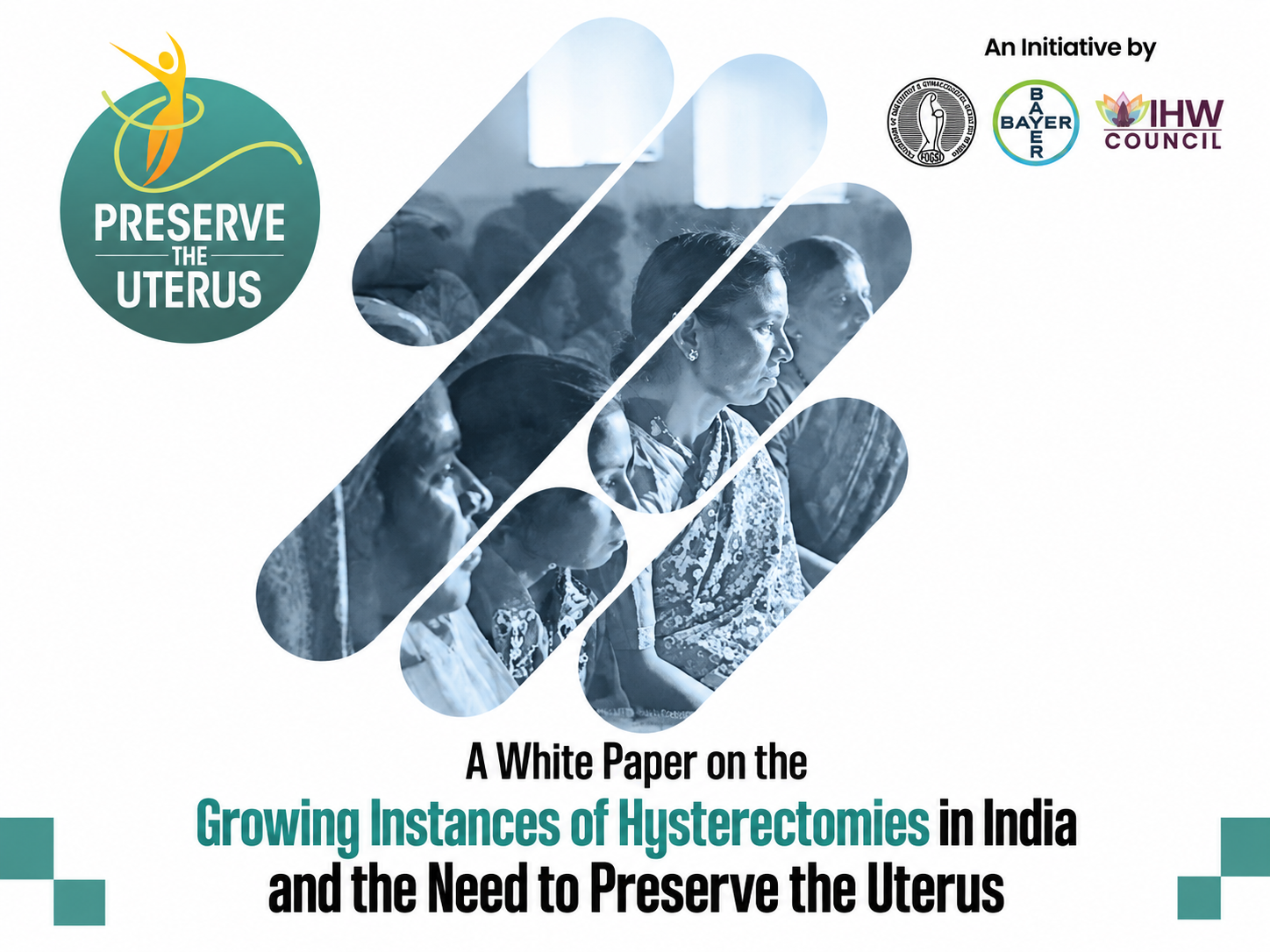
Women’s health is not only about access to treatment—it is also about access to the right information, timely diagnosis, and the opportunity to make informed decisions about treatment. This principle lies at the heart of “Preserve the Uterus,” a nationwide awareness initiative highlighted in Health Impact Groundbreakers 2022.
The campaign was launched to address concerns around untimely and potentially unjustified hysterectomies and to create greater awareness about modern approaches to managing conditions such as Heavy Menstrual Bleeding (HMB). The initiative brought together Bayer, the Federation of Obstetric and Gynaecological Societies of India (FOGSI), and the Integrated Health & Wellbeing Council (IHW Council).
Understanding the Need for Uterus Preservation
A hysterectomy is a surgical procedure involving removal of the uterus. Depending on the medical circumstances, related reproductive organs may also be removed. While hysterectomy can be medically necessary and appropriate for certain conditions, the Health Impact Groundbreakers 2022 feature highlighted concerns around procedures performed prematurely or without adequate consideration of alternatives.
Citing NFHS 2015–16 data, the publication reported a hysterectomy prevalence of 3.6% among women aged 30–39 years. It also noted that heavy or excessive menstrual bleeding was an underlying reason for hysterectomy among a substantial proportion of women who underwent the procedure.
These historical figures underline the importance of ensuring that women experiencing gynaecological conditions receive appropriate evaluation, counselling, and information about available treatment options.
Heavy Menstrual Bleeding Needs Greater Awareness
Heavy menstrual bleeding can significantly affect a woman’s physical health, emotional well-being, daily activities, and quality of life. Yet awareness about the condition and its management options may be limited.
For some women, surgery may ultimately be clinically appropriate. However, the central message of Preserve the Uterus is that women should have access to informed discussions with qualified healthcare professionals about appropriate management options before proceeding with irreversible treatment.
The campaign therefore aimed to increase awareness of modern methods for managing HMB while simultaneously strengthening knowledge among healthcare practitioners.
Putting Informed Choice at the Center
The phrase “Preserve the Uterus” represents more than an awareness campaign. It reinforces the importance of informed decision-making in women’s healthcare.
Women need understandable information about their condition, its potential progression, treatment alternatives, possible benefits and risks, and when surgical intervention may be necessary. This enables a more meaningful conversation between patients and healthcare providers.
The campaign sought to empower women with better information while sensitising healthcare professionals to the implications of untimely or unjustified hysterectomy. The publication notes that hysterectomy, particularly at younger ages, may have physical and psychological consequences that deserve consideration in clinical decision-making.
Importantly, uterus preservation should not mean avoiding a medically necessary hysterectomy. Instead, it means ensuring that the decision is clinically justified, appropriately timed, and made after adequate counselling about suitable alternatives.
Building Capacity Among Healthcare Professionals
Creating awareness among patients alone cannot transform healthcare outcomes. Healthcare professionals are equally important to the process.
A major component of the initiative therefore focused on knowledge sharing and capacity building among medical practitioners. Workshops, forums, and virtual and physical meetings were designed to improve understanding of gynecological conditions and increase familiarity with contemporary approaches to HMB management.
According to the 2022 publication, Bayer’s healthcare-professional education initiatives had reached more than 3,800 practitioners, supported by 35 physical meetings and more than 20 digital meetings. Postgraduate students were also included through training programs.
Such capacity-building efforts demonstrate how awareness campaigns can move beyond communication to strengthen healthcare delivery itself.
Reaching Women Through Awareness and Education
Another important pillar of the campaign was direct awareness among women.
The initiative proposed using multiple communication channels, including digital and social media, to improve understanding of heavy menstrual bleeding and encourage informed conversations about its management.
This is particularly important because menstrual health can remain difficult to discuss openly. Social stigma, limited awareness, and normalization of symptoms can prevent women from seeking timely medical advice.
Better health literacy can help women recognize when menstrual symptoms require professional attention and encourage them to ask questions about diagnosis and available treatment options.
Collaboration for Sustainable Women’s Health Impact
The campaign also recognized that reducing inappropriate or untimely procedures requires participation beyond individual patients and doctors.
Its implementation framework included engagement with state governments and other public bodies, alongside healthcare-professional education and public awareness. The intended outcomes included reducing the health-system burden associated with hysterectomies, improving women’s awareness, and increasing healthcare professionals’ acceptance of modern medical management approaches where clinically appropriate.
This multi-stakeholder approach demonstrates an important lesson for women’s health programs: sustainable impact requires awareness, medical education, health-system engagement, and patient empowerment to work together.
Towards More Informed Women’s Healthcare
Preserving the uterus ultimately advances a simple but important principle: women should be active participants in decisions about their own health.
Better awareness of menstrual disorders, timely consultation, appropriate diagnosis, evidence-based treatment, and informed patient-provider conversations can help ensure that women receive care suited to their individual medical needs.
By bringing together women, healthcare practitioners, professional bodies, industry, and public institutions, initiatives such as Preserve the Uterus can contribute to a healthcare environment in which informed choice and women’s well-being remain at the center.
