
India’s G20 Presidency in 2023 presented a significant opportunity to strengthen global cooperation on health, promote healthcare equity and advance resilient health systems. The COVID-19 pandemic had demonstrated that public health challenges transcend national boundaries and require coordinated international responses.
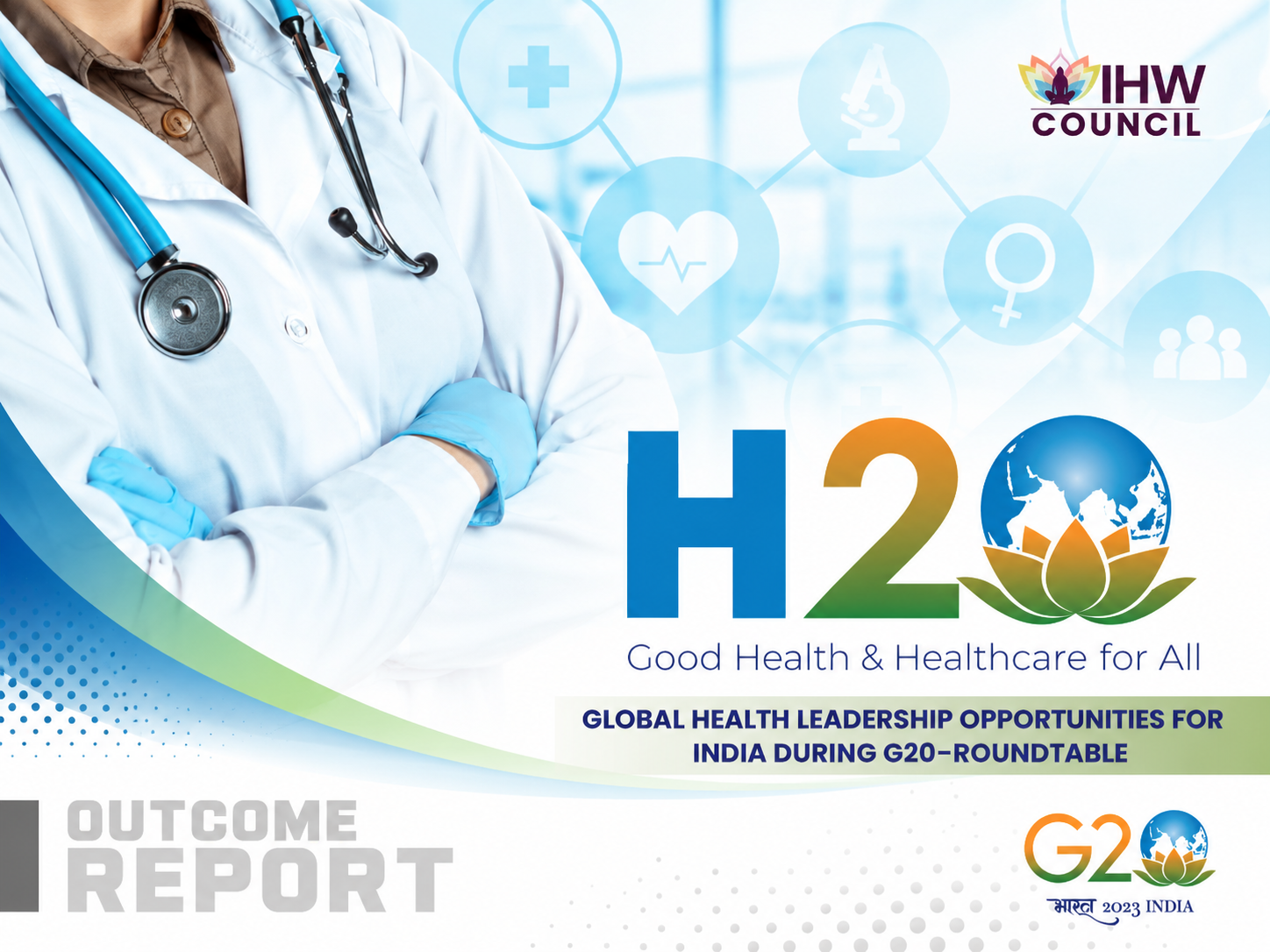
Against this backdrop, the Integrated Health & Wellbeing Council (IHW Council) organised the Global Health Leadership Opportunities for India During G20 Roundtable, bringing together public health experts, medical professionals and policy stakeholders to explore India’s potential contribution to global health leadership.
The discussions focused on leveraging India’s healthcare experience, pandemic response, medical innovation and traditional wellness practices to advance the shared goal of good health and healthcare for all.
India’s G20 Presidency and the Vision of Global Health Equity
Guided by the philosophy of Vasudhaiva Kutumbakam — One Earth, One Family, One Future, India’s G20 Presidency offered a platform to encourage inclusive and sustainable healthcare development.
The roundtable emphasised that economic and social progress cannot be separated from population health. Participants recognised the importance of strengthening healthcare infrastructure, sharing successful public health models and improving international cooperation.
The discussions also highlighted the Global South’s potential to contribute to healthcare leadership, particularly by advancing equitable access for women, LGBTQ communities, indigenous populations and other underserved groups.
Learning from India’s COVID-19 Response
One of the roundtable’s central themes was the opportunity to share lessons from India’s pandemic response.
Lov Verma, former Health Secretary, Ministry of Health and Family Welfare, highlighted the importance of showcasing India’s healthcare achievements, particularly its use of technology during the pandemic.
Experts discussed how crisis management strategies, healthcare infrastructure development and technological innovation could inform responses to future public health emergencies.
The panel also stressed that pandemic-related progress should not lead to complacency. Continued investment in healthcare preparedness, disaster management and resilient health systems remains essential.
Strengthening Primary Healthcare and Preventive Health
Primary healthcare emerged as a cornerstone of the roundtable’s recommendations.
The expert panel called for stronger primary healthcare systems, integrated preventive services and a shift from treating illness towards promoting long-term wellness.
Dr. Ajay Khera, Country Representative, EngenderHealth, highlighted India’s experience in strengthening primary healthcare and pointed to successful public health initiatives such as polio eradication and HIV control.
The discussions reinforced the need to combine prevention, health promotion and treatment within comprehensive healthcare systems.
India’s experience in managing non-communicable diseases was also identified as a potential model for knowledge-sharing through the G20 platform.
Digital Health and Technology for Universal Healthcare
Digital innovation was recognised as a major opportunity for improving healthcare accessibility.
Experts discussed the potential of healthcare technologies, digital public goods, health information systems and data-driven monitoring to strengthen service delivery.
However, the roundtable also acknowledged that technology must not widen existing inequalities.
The panel recommended addressing the digital divide, improving transparent health-data sharing and strengthening cybersecurity to protect vulnerable health systems.
A collaborative digital health agenda involving strategy, governance, financing and practical solutions was identified as an important pathway towards universal health coverage.
Vaccine Equity and Global Health Preparedness
The pandemic demonstrated the importance of reliable vaccine production, supply chains and equitable distribution.
The roundtable recommended establishing vaccine hubs to support global vaccine equity, with India potentially contributing a roadmap based on its healthcare and manufacturing experience.
Experts also called for policy mechanisms governing the supply and distribution of raw materials required for vaccine production and essential medicines.
These recommendations reflected the need for stronger international cooperation in preparing for future health emergencies.
Addressing Climate Change and Social Determinants of Health
The relationship between climate change and public health was another important focus.
Participants emphasised that the climate crisis must also be understood as a health crisis, requiring coordinated policies and sustainable financing.
Dr. Karan Thakur, Vice President – Operations & Public Affairs, Indraprastha Apollo Hospitals, highlighted the importance of structured financing mechanisms for climate mitigation and social determinants of health.
The discussions recognised that environmental conditions, social inequalities and access to essential services influence health outcomes.
A comprehensive global health agenda must therefore address the conditions that shape people’s health alongside healthcare delivery.
Promoting Women’s Health and Behavioural Change
The roundtable also highlighted the importance of health communication in improving public awareness and encouraging behavioural change.
Experts called for stronger efforts to address stigma surrounding women’s health and other neglected health conditions.
Urvashi Prasad, Director at NITI Aayog’s Development Monitoring & Evaluation Office, emphasised the opportunity to build upon behavioural changes observed during the pandemic.
The panel additionally recommended involving faith-based leadership in health awareness initiatives to strengthen outreach to underserved communities.
Building an Inclusive Global Health Future
The roundtable produced 20 expert recommendations, spanning primary healthcare, wellness, digital inclusion, vaccine equity, cybersecurity, patient-centric systems, health communication and international cooperation.
These recommendations reflected a shared understanding that sustainable health progress requires collaboration among governments, healthcare institutions, private organisations and communities.
Kamal Narayan, CEO of IHW Council, highlighted India’s opportunity to advocate inclusive, accessible and comprehensive healthcare systems during its G20 Presidency.
The Global Health Leadership Opportunities for India During G20 Roundtable demonstrated how India could use international engagement to promote healthcare innovation, share public health experience and strengthen cooperation across the Global South.
Its central message remains relevant: achieving health for all requires resilient systems, equitable access, shared knowledge and sustained collective action.
