



Obesity has emerged as a significant public health challenge in India, affecting individuals across age groups and contributing to the growing burden of non-communicable diseases. Changing dietary patterns, sedentary lifestyles, urbanization, and limited awareness about healthy living have made obesity prevention an increasingly important healthcare priority.
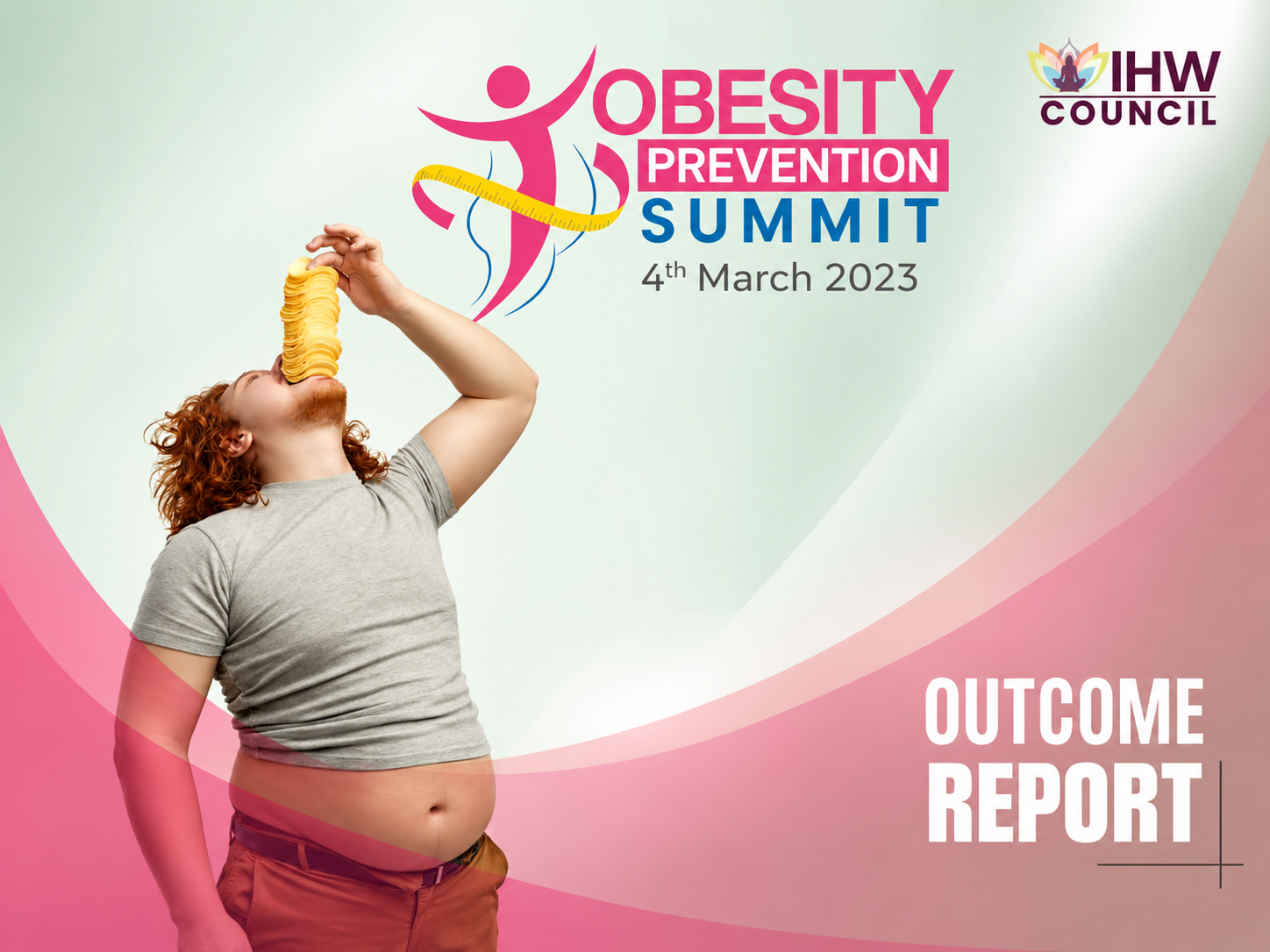
Recognizing the need for collective action, the Integrated Health & Wellbeing Council (IHW Council) organized the Obesity Prevention Summit 2023 on 4 March 2023, bringing together healthcare professionals, nutrition experts, policymakers, and industry representatives.
The summit focused on the importance of prevention, sustainable lifestyle changes, clinical management, and coordinated public health strategies to address obesity in India.
Understanding India’s Growing Obesity Challenge
The summit’s outcome report highlighted rising concerns around overweight and obesity in both urban and rural populations.
Drawing on the National Family Health Survey 2019–21, the report cited an estimate of approximately 23% for obesity in India, underscoring the need for greater attention to weight-related health challenges.
Obesity is closely associated with several non-communicable diseases, including type 2 diabetes, cardiovascular conditions, and metabolic disorders. Its effects can also extend to reproductive health, emotional well-being, and overall quality of life.
The Summit encouraged stakeholders to recognize obesity as a serious health condition rather than viewing it solely as a cosmetic concern.
Addressing Obesity Through Policy and Awareness
The opening session, “Tackling India’s Silent Epidemic: Highlighting Policies & Strategies for Obesity Prevention,” examined the importance of public awareness, government action, and preventive healthcare.
Kamal Narayan, CEO of IHW Council, highlighted sedentary lifestyles, urbanization, and changing food habits as contributing factors.
Dr. Sanjiv Kumar, a member of the Governing Board at the National Institute of Health and Family Welfare, emphasized the need to understand obesity within the broader context of malnutrition and nutritional deficiencies.
The discussions reinforced the importance of combining public health policies with practical interventions that help people make healthier choices.
Obesity and Diabetes: Understanding the Connection
A dedicated panel explored the relationship between obesity and diabetes, particularly the importance of weight management in improving metabolic health.
Dr. Sujoy Ghosh, a diabetologist and endocrinologist, discussed the significance of obesity and genetic factors in type 2 diabetes.
Dr. Banshi Saboo, President of the All India Association for Advancing Research in Obesity, called for preventive, multisectoral approaches beginning at the school level.
Prof. Dr. Anoop Misra emphasized the importance of appropriate medical treatment combined with lifestyle modifications for sustainable health benefits.
These discussions highlighted the need for integrated approaches to obesity and diabetes management.
Nutrition and Sustainable Lifestyle Changes
Nutrition emerged as a central theme of the Obesity Prevention Summit 2023.
Experts discussed the importance of balanced eating habits, nutritional awareness, and long-term behavioral changes.
Clinical nutritionist Ishi Khosla highlighted the relationship between gut health, inflammation, and dietary patterns, while Dr. Aparna Govil Bhasker emphasized returning to the fundamentals of nutrition.
The Summit also encouraged greater awareness about fiber-rich foods, millets, and sustainable dietary practices.
Rather than focusing exclusively on short-term weight reduction, the discussions promoted consistent, achievable lifestyle changes that support long-term well-being.
Addressing Obesity Among Adolescents and Adults
The summit examined the growing burden of obesity among adolescents and adults and the importance of age-appropriate interventions.
Dr. Monika Arora from the Public Health Foundation of India highlighted cultural influences and the need to promote sports and physical activity at the population level.
Dr. Anjali Hooda Sangwan emphasized individualized weight-management approaches.
Experts also discussed the relationship between obesity and reproductive health, alongside the importance of adequate sleep and mental well-being.
The broader message was that obesity prevention requires attention to multiple aspects of daily life, not diet alone.
Medical Interventions and Personalized Obesity Management
The Summit recognized that lifestyle modifications are important, but some individuals also require medical intervention.
Dr. Pradeep Chowbey discussed the role of weight management and appropriate clinical treatment in improving patients’ quality of life.
The expert recommendations highlighted the importance of clinical research and responsible use of medicines and bariatric surgery for appropriately selected patients with severe obesity.
They also emphasized counselling and continued support following surgical treatment.
These discussions reinforced the need for evidence-based, individualized obesity care under qualified medical supervision.
Key Recommendations for Obesity Prevention
The Summit’s expert panel called for stronger public awareness, nutrition education in school curricula, healthier family environments, and a whole-of-society approach to obesity prevention.
The report also recommended greater use of digital fitness tools, stronger clinical research, regulation of misleading nutrition advertising, and improved access to appropriate medical interventions.
Importantly, prevention was positioned as a responsibility shared by families, schools, healthcare professionals, policymakers, and communities.
Building a Healthier Future Through Collective Action
The Obesity Prevention Summit 2023 demonstrated the importance of addressing obesity through education, prevention, clinical care, and sustained behavioral change.
The event also generated substantial digital engagement. According to the Summit’s outcome report, its campaign recorded more than 60 lakh impressions, over 30,000 user engagements, and more than 2,500 tweets.
These figures reflected the campaign’s reported reach and the wider interest in obesity awareness during the event.
Ultimately, the Summit reinforced a vital message: obesity prevention requires coordinated, compassionate, and sustained action.
By strengthening nutrition awareness, encouraging physical activity, improving access to medical care, and promoting healthier environments, India can work towards reducing obesity-related health risks and building a healthier future for all.
